
The question “What is your greatest weakness?” is the most dreaded part of any interview. Most candidates try to dodge it by giving a “fake” weakness (“I work too hard” or “I’m a perfectionist”).
Don’t do this. Interviewers see right through it.
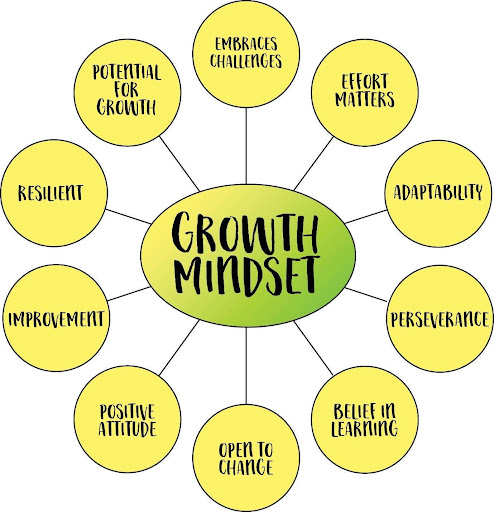
Instead, use this question to prove you are dedicated, self-aware, and passionate about learning. The goal isn’t to show you are perfect; it is to show you are evolving. We call this the Growth Arc.
Shutterstock
Strategy 1: The “Conquered Weakness” (Turning it into a Strength)
The best way to answer this is to discuss a previous weakness that you have actively fixed. This proves you can identify a problem in your own skillset and solve it.
The Structure:
- The Confession: Admit what you used to struggle with (be honest).
- The Epiphany: Explain why you realized it was a problem.
- The Fix: What specific training, tool, or practice did you use to solve it?
- The Transformation: How is this now a strength?
Example: Delegation
- The Confession: “Early in my career, I struggled with delegation. I wanted to double-check every piece of work myself.”
- The Fix: “I realized this was slowing the team down. So, I took a course on Agile Project Management and started using Trello to track tasks visibly without hovering.”
- The Transformation: “Now, I am actually best known for building autonomous, high-trust teams. I learned that trusting my team gets better results than controlling them.”
Why this wins: You admitted a flaw (micromanagement) but finished by proving you are now an excellent leader.
Strategy 2: The “Work in Progress” (Showing Dedication)
Sometimes you haven’t fully “fixed” the weakness yet. That is okay. If the interviewer spots a gap in your CV, don’t hide it. Own it, and show them the roadmap you are on to fix it.
If you are honest about the gap but passionate about the solution, you look like an awesome candidate who loves to learn.
The Structure:
- The Awareness: “I know this is an area I need to develop.”
- The Action Plan: “Here is exactly what I am doing right now to fix it.”
- The Early Results: “I’m already seeing progress.”
Example: Public Speaking
- The Awareness: “I used to get very nervous presenting to large groups, and I know that communication is key for this role.”
- The Action Plan: “I didn’t want this to hold me back, so two months ago I joined a local Toastmasters group. I also listen to podcasts on public speaking during my commute.”
- The Early Results: “I’m still working on it, but my last two presentations were much smoother, and I’m actually starting to enjoy the challenge.”
Why this wins: You aren’t perfect, but you are brave and proactive. It creates the impression that if you don’t know how to do something, you will go out and learn it immediately.
The “Safe Zone” Selection
When choosing a weakness, you must be strategic.
- Don’t choose a fatal flaw: If you are applying to be an Accountant, do not say your weakness is “Attention to Detail.”
- Do choose a secondary skill: If you are a Software Engineer, a safe weakness might be “Public Speaking” or “Creative Writing.”
Summary: The Impression You Leave
When you answer this way, the interviewer stops thinking about the “Weakness” and starts thinking about your character. They will leave the room thinking:
- “They don’t make excuses; they take action.”
- “They are self-aware enough to know where they need to improve.”
- “They are passionate about self-development.”
You are not presenting a defect; you are presenting a trajectory of success.
What’s Next? The Final Question
You have now prepared the content (the Shopping List), mastered the structure (the STAR Approach), and conquered the tricky self-reflection questions (the Growth Arc).
Our final section, The Final Question, will prepare you for the vital closing moments of the interview—when the interviewer asks: “Do you have any questions for me?” We’ll cover how to use this moment to show strategic thinking and reinforce your fit for the role.